The Orange County War of 1856
Here's a version of it I bet you never heard before.
(From the Calcasieu Press)
Madison, Orange County, Texas
July 4th, 1856
Mr. Editor:
Your readers will perhaps be benefited by a knowledge of the present state of affairs in Orange County, Texas. If you think so, you are at liberty to publish in your valuable paper, the following statement which will be found near the truth:
First, all the good citizens of the county are under arms on duty in various directions, endeavoring to drive out from their midst a gang of gamblers, cow, hog and horse thieves, mail robbers, mail burners, counterfeiters, and murderers, who have been collecting in this county for many years, increasing in boldness as they increased in numbers, till they became wicked beyond endurance.
These villains of various criminal hue, have been ordered to leave the county and go beyond the limits of fifty miles distance. The number of these characters may equal forty, more or less, including all the free mulattoes and their white associates.
At the present writing only three have been killed, some others keep themselves hid in the thickets and marshes, playing a hide and seek game to assassinate the better citizens and fulfill their threats heretofore made, and many are aiming to go into Calcasieu and the adjoining parishes to live.
I will give you the names of many of these people and a light touch of their practices, that your readers may be on their guard.
Wm. Ashworth, mulatto, has possessed a handsome stock of cattle, and for many years has proved himself a man of universal hospitality, but owing to his color, few people of honor and pride of character have descended to enjoy it, while hordes of gamblers, thieves and counterfeiters hung about him and played securely at their respective games unmolested, except by one another. It is said, (and believed to be true) that some 7 men have been shot in his house in the course of his hospitality to these villains.
His son Luke has pursued a course which has thrown some wealth into his hands, but although he has cautiously avoided the appearance of open dishonesty, yet he has been a secret keeper for these rascals and had knowledge of the most of their rascality without ever informing the officers of Justice.
Henderson, 2d son of Wm. Ashworth, never courted the name of honesty, as I can learn, but on the contrary, is inclined to boast of his ability to steal, and I have no doubt but he is entitled to all the honor due to a master thief and an accomplice in murder. Luke Ashworth and others, state that he penned 18 head of cattle belonging to the neighbors and killed them at one time, for the hides. He assisted in the murder of Samuel Deputy.
Clark Ashworth, 3rd son of Wm. Ashworth, has acted his part among the rest, and, on his own responsibility, only stands bound over the court for the Hog stealing.
Tap Ashworth, was driven from an adjoining County for some misdemeanor, and is now involved in a law suit (I am told) of a thousand dollars on account thereof; since residing here, nothing has been alleged against him more criminal than his assistance personally rendered to Henderson in penning the stolen cattle which he butchers; for which he, Tap, receives gratis as much of the choice beef as he wants.
Aaron Ashworth, has never been charged with dishonesty, nor has he entertained a promiscuous suit of vagabond parasites; but having raised a number of daughters of color, he seems to have disposed of them unluckily among a set of lazy, idle white men for mistresses, who were allured more by the beauty of a few cattle bestowed on them, than by the beauty of the girls. Thus he has entailed upon our country a horde of worthless creatures in a shape of human beings, who, no doubt will in due time, be ready to steal and burn any property which the more honorable and industrious citizens may construct for the beauty and improvement of this country.
Sam Ashworth, son of Aaron, seems to inherit in his disposition, all the most diabolical qualities of the Indian, Negro and White man, without any of their principles, is the murderer of Samuel Deputy, a very useful and enterprising citizen. He had attempted to murder several before, but without success. He now stands indicted for one attempt by the Grand Jury of your Parish, and a writ was issued more than a year ago; but for want of an efficient officer, or some other reason unknown to me, no exertion has been made to arrest him, and he is still at large, threatening the lives of several others.
Those who are considered directly accessory to the murder of Deputy are Jack Bunch, Ned Glover, Bill Blake, Burwell Alexander and Henderson Ashworth, the Cow Thief. Jack Bunch, cousin to Sam, assisted in killing Deputy, and is guilty of killing by his own hand, Terly, the drunken keeper of his sister a few years ago.
Ned Glover, alias Haywood, according to his own confession before execution, murdered a man in the State he came from, and changing his name, made his escape to this country. He together with Bill Blake and Burwell Alexander, are accessory to the death of Deputy, by allowing Sam Ashworth, then a prisoner under them, to go at large, but a few hours before the murder took place, Glover is well known to deal in counterfeit money.
Bill Blake is well known to be an extensive and accomplished Thief, Gambler and Counterfeiter.
Burwell Alexander, is at present in Madison recovering from his wounds.
[Illegible] Smith, [illegible] and Bill Wingate are the reputed burners of the East pass Saw Mill and are [illegible] cow and hog thieves.
Jack, {illegible] and Mart Stewart, Bill Jim and Steve Wingate—Johnson and Oliver Clark, Ana and Jim Mc[illegible], all he bunches, and some others are all [illegible] cow and hog thieves, belonging to Henderson Ashworth’s gang.
Willis Goodman, Wright, Pate, Charlie Martin are promiscuous thieves and villains of various hues.
Jack Moore was a bold counterfeiter the man of the mint, and was executed by the Committee of safety amidst his coin and dies, at Joe Bremons on Sabine in the big thicket. Boz Sapp and his father Addison Sapp, were found with him, but made his escape bare footed and bare headed, leaving their saddle bags, in which was found plenty of proof of their rascality and guilt.
The balance of them are either connected with Bill Blake’s gang of horse thieves or Henderson’s gang of cow thieves or both.
The White people on Johnson’s Bayou have wisely determined to rid themselves of their colored neighbors who keep up a constant intercourse with rascals abroad, and they have already ordered them to leave.
They find it impossible with safety to let any remain, as it is reduced to a certainty, that the most honest among them will hide for others who steal and commit other depredations. So your readers may look for the following names among them ere long, to wit: Franswa Galia, Silista Galia, Eli Burwick, James Anderson, Drury Ashworth, Larkin Ashworth, Wm. Nelson, Moses Nelson, Robert Nelson, Stephen Perkins, and Jonathan Carter, all of colored families.
Now Mr. Editor, your readers at once the impropriety of allowing this motley gang to settle among them without industry, without moral principle, and without the least shade of hope, that their descendants which they are propagating, can ever be admitted to an equality with the white people. And they at once see the mistake, which these colored people are laboring under to want a settlement there, under such circumstances. Can you, Mr. Editor (I believe you can), convince some of the leading ones among these deluded people, of this mistake, and show them their true interest in making their exoduses beyond the Rio Grande, where they and their children will at once be on an equality with the Natives of that Country.
Adieu [signed:] PROGRESSION
Monday, March 12, 2007


Monday, January 15, 2007
A Letter from Bearhead
I'm glad our message is getting out there, but that dude is lucky he didn't get shot. You just don't approach a Redbone you don't know that aggressively. I know people who live in DeQuincy that would have shot him about the time he got out of his pickup truck and headed towards them.
I remember reading a mystery by Tony Hillerman which was set on the Navajo Reservation in Arizona. His character drove up to someones house and sat in the car for a few minutes, waiting for the occupant of the house to come to the door. He explained that it would be rude to jump out of the car too quickly. I thought to myself, that's how we Redbones are, too. Maybe for other reasons, but when I was growing up, if someone parked in your driveway, you walked over to the door to see who it was, waiving them in when you saw who it was. I don't remember if the visitors would be waiting to be invited in, in fact, I doubt it, but I do remember that you didn't just jump out of your car and run to the door.
When I was in DeQuincy in November of this past year, I remembered this enough to sit in my car for a minute or two before jumping out and going to someones door. On each of those occasions, the person I was visiting came to the door and waived me in.
I'm just saying, that's all.
Hey Cousins,
I've got to share this with you all.
This event happen yesterday to Erlene when she was leaving one of the stores here in Dequincy. It was right at dark, Erlene had gotten into the truck to leave the store, as she was backing up to turn around to enter the road, another truck passed. She heard a noise and looked around and this truck had slammed on its brakes and thrown the truck in reverse. It backed up and drove into the drive beside her. The driver door flung open and got out. She saw the look on his face and thought to herself, Oh no here is a nut, what's he going to do!!!!. She said his eyes were the size of silver dollars, He came up and knocking on the window with one hand and had the other one in the air made into a fist. He was saying over and over, YES! YES!YES! He kept motioning for her to roll down her window.
Since there was a few people around, she lowered her window enough to hear him and he told her this.
"Lady," he said, "I don't know who you are and you know nothing of me. I have just found out in the last few months that I am a descendant of Redbones and maybe Indians. He said he had lived in California all his life and had never been to Louisiana, but once he learned of his ancestors history and where they were from, he packed up and left Calfornia and just moved here to be amongst his people and to become one of them.
She said he was talking a mile a minute. He then said the reason he stopped was because he saw her license plate which says "R3DBONE" and the "REDBONE AND PROUD OF IT" bumper sticker. He went on to tell her to never be ashamed of who you are and who your people are.
He said "I am so proud of my people and our ancestors." She was still a little shocked over this and kept saying over and over O.K. O.K. and drove off without even mentioning his name. As she drove off he was still standing there with his fist in the air saying over and over "YES! Yes! Yes!
Thought I would just pass this along to show you our message is working in mysterious ways, just as our ancestors did.
Terry
I'm glad our message is getting out there, but that dude is lucky he didn't get shot. You just don't approach a Redbone you don't know that aggressively. I know people who live in DeQuincy that would have shot him about the time he got out of his pickup truck and headed towards them.
I remember reading a mystery by Tony Hillerman which was set on the Navajo Reservation in Arizona. His character drove up to someones house and sat in the car for a few minutes, waiting for the occupant of the house to come to the door. He explained that it would be rude to jump out of the car too quickly. I thought to myself, that's how we Redbones are, too. Maybe for other reasons, but when I was growing up, if someone parked in your driveway, you walked over to the door to see who it was, waiving them in when you saw who it was. I don't remember if the visitors would be waiting to be invited in, in fact, I doubt it, but I do remember that you didn't just jump out of your car and run to the door.
When I was in DeQuincy in November of this past year, I remembered this enough to sit in my car for a minute or two before jumping out and going to someones door. On each of those occasions, the person I was visiting came to the door and waived me in.
I'm just saying, that's all.
Friday, October 13, 2006
Bumper Sticker Time
This is the first bumper sticker. It'll be ready for the Ashworth and Droddy gatherings in early November. If you want one before then, send me $2 each to cover cost and postage and I'll get one in the mail to you.

My personal favorite, Red to the Bone! does not have the word Redbone in it, and no, close isn't enough in this instance. Likewise, I did not go with the RHF sloan, Redbone, Taking Pride in Who We Are with this first round of bumper stickers. That can come later.
This is the first bumper sticker. It'll be ready for the Ashworth and Droddy gatherings in early November. If you want one before then, send me $2 each to cover cost and postage and I'll get one in the mail to you.
My personal favorite, Red to the Bone! does not have the word Redbone in it, and no, close isn't enough in this instance. Likewise, I did not go with the RHF sloan, Redbone, Taking Pride in Who We Are with this first round of bumper stickers. That can come later.
Friday, September 08, 2006
Redbone and Proud
Acceptance of the word "Redbone" is not something imposed from outside
by others. We've rejected that approach for as long as we've heard
the word. Don and LV just reenacted the gunfight at Smokey Grove.
Don uses the term like someone in the dominant culture as simply a
descriptive noun. LV responds with the Al Pacino line, "you talking
to me?" Amos knew who and what the guy meant when he said "where are
those Redbones?" Didn't like it one bit, but he knew who the guy was
talking about.
The thing is, Redbones have never had a sense of group identity with
each other much beyond family lines. Just because someone calls you
something doesn't make you one. If enough people call me a bastard,
do I start looking for a club to join? Do I substitute their opinion
of me for my own?
Our families lived for 200 years with the one-drop rule. It didn't
matter how many times they made us write FPC, Free Negro, or Mulatto
on the blackboard, we have always seen ourselves White. Why? Because
we didn't have any other option. We were simple people trying to get
by the best we could. I'm sure if any of my ancestors realized that
embracing our Indianness would get their decendants a casino, they'd
have worn paint and feathers, but they didn't.
Look at the Caine River Creoles. Compare their status to ours
starting in 1800 and ending at 2000. What's the biggest difference
between their demise and our success? We have never agreed that we
were anything other than White mixed with Indian. It's been bred into
us. Am I in denial, or am I being loyal to my ancestors? Here's the
thing: in theory, I'm okay with having a black ancestor. Show me the
proof. If you can't stand up in a conference of genealogists and
prove it, then don't bother me with it. Until you can prove my oral
history wrong, leave me alone. I'm an Indian-White mix who is
White-identified. I will not dance to contemporary theories on the
graves of my ancestors.
The movement to rehabilitate the word and to build a positive
association to it has already begun. I didn't begin it and no one in
this room began it, but I do enjoy talking about it. Before I'm
through I'm going to have a book of my own right next to Don's on that
shelf of Redbone literature. It'll probably be mostly bullshit, but
that won't make my mother any less proud of me.
Redbones exist. Not everyone who thinks they is is, and not everyone
who thinks they ain't ain't. I'm an Internet Redbone myself. If I
lived on Bearhead these days they'd probably burn me out. Those
people down there have always been "rascally and treacherous."
Acceptance of the word "Redbone" is not something imposed from outside
by others. We've rejected that approach for as long as we've heard
the word. Don and LV just reenacted the gunfight at Smokey Grove.
Don uses the term like someone in the dominant culture as simply a
descriptive noun. LV responds with the Al Pacino line, "you talking
to me?" Amos knew who and what the guy meant when he said "where are
those Redbones?" Didn't like it one bit, but he knew who the guy was
talking about.
The thing is, Redbones have never had a sense of group identity with
each other much beyond family lines. Just because someone calls you
something doesn't make you one. If enough people call me a bastard,
do I start looking for a club to join? Do I substitute their opinion
of me for my own?
Our families lived for 200 years with the one-drop rule. It didn't
matter how many times they made us write FPC, Free Negro, or Mulatto
on the blackboard, we have always seen ourselves White. Why? Because
we didn't have any other option. We were simple people trying to get
by the best we could. I'm sure if any of my ancestors realized that
embracing our Indianness would get their decendants a casino, they'd
have worn paint and feathers, but they didn't.
Look at the Caine River Creoles. Compare their status to ours
starting in 1800 and ending at 2000. What's the biggest difference
between their demise and our success? We have never agreed that we
were anything other than White mixed with Indian. It's been bred into
us. Am I in denial, or am I being loyal to my ancestors? Here's the
thing: in theory, I'm okay with having a black ancestor. Show me the
proof. If you can't stand up in a conference of genealogists and
prove it, then don't bother me with it. Until you can prove my oral
history wrong, leave me alone. I'm an Indian-White mix who is
White-identified. I will not dance to contemporary theories on the
graves of my ancestors.
The movement to rehabilitate the word and to build a positive
association to it has already begun. I didn't begin it and no one in
this room began it, but I do enjoy talking about it. Before I'm
through I'm going to have a book of my own right next to Don's on that
shelf of Redbone literature. It'll probably be mostly bullshit, but
that won't make my mother any less proud of me.
Redbones exist. Not everyone who thinks they is is, and not everyone
who thinks they ain't ain't. I'm an Internet Redbone myself. If I
lived on Bearhead these days they'd probably burn me out. Those
people down there have always been "rascally and treacherous."
Wednesday, September 06, 2006
Wednesday, August 30, 2006
Drums along the Bayou
Tuesday, August 29, the list "owner," Bill Farris, banned LV Hayes from the Redbone Yahoo Discussion Group. Last week, LV got into a contentious exchange with two other members of the group and exchanged strong words. At least two or three people quit the list ostensibly because of the bickering. Then things settled down. That is, until Bill cut LV off from the group without notice or explanation to LV. In response to that, I sent a version of this email to half a dozen or so members of the discussion group.
Tuesday, August 29, the list "owner," Bill Farris, banned LV Hayes from the Redbone Yahoo Discussion Group. Last week, LV got into a contentious exchange with two other members of the group and exchanged strong words. At least two or three people quit the list ostensibly because of the bickering. Then things settled down. That is, until Bill cut LV off from the group without notice or explanation to LV. In response to that, I sent a version of this email to half a dozen or so members of the discussion group.
I'm very disappointed that Bill Farris took it upon himself to censor one of the best sources of information to come along and grace the Redbone Yahoo Discussion List since its inception. I would implore any of you who have any influence with him to disabuse him of the notion that the choice is his alone to make. Unless immediately rescinded, I will organize another discussion group under the title of Bearhead Creek Redbones that will differ from the established group inasmuch as it will not censor the preiminent living authority of our descended from families from the discussion just because he's rude. Let anyone offended step forward and demand apology. Censoring someone just because they're rude is unacceptable to me. Refute his information. Don't censor my right to hear him rant about it.
By the way, I'm still waiting for Stacy's explanation as to why she made that Gilbert quote so [explicative deleted] prominent in her trial run press release, knowing it was wrong and disproved. I'm also still waiting for Catherine Davidson's apology for misnaming me in her little huff last week. Spreading incorrect information under the banner of the RHF or the Redbone Discussion Group is far more offensive to me than calling someone names.
I am not making excuses for LV's behavior or his language. There's nothing to excuse. He got into a very contentious debate last week with two people of the discussion group. Each of them ably refuted his sarcasm as well as his allegations with points of their own. Neither has asked for his banishment, so why would Bill take it upon himself to end the debate thusly? I won't have LV held to a different standard, just because he calls a fool a fool. His calling someone a fool doesn't make them a fool. They have to do that by themselves.
Monday, May 29, 2006
Going Fishing
There used to be a tradition in our family of going out and camping for the week-end. The two I can remember were over the course of a July 4th week-end. There were at least two of my uncles, my aunt Lela and family, my aunt Elsie, Mama, Bubba and me. Lela's group consisted of husband Albert, sons Clebert, Donald Ray, Darrell and Buddy, daughter June and her husband, Bobby and which ever one she was married to at the time, and Sue Baby. That was a lot of people, but the women seemed to know instinctively how to set up a fish camp.
Getting down to the creek was as big a part of the adventure as was camping out itself. There would be a caravan of old cars, pick-ups, a station-wagon thrown in for good measure, each filled with chatting women, hollering kids, with the occasional threat by some adult that "you kids better settle down back there." At a point which seemed as random as the occasional cloud, the caravan left the road and headed down to the creek through miles of pine forest.
Once the caravan was unloaded of people and materiel, the men and boys went off to fish for supper while the women set up their camp kitchens. Catching enough fish for supper was no problem with a dozen hooks in the water. The young kids were set up between the watchfull eyes of the older ones, while the men sought out favored spots remembered from previous years.
In the South before air conditioning, there were a limited number of things one could do in the high heat of the day. Napping on a hamock in the shade with a glass of tea or a cold beer is one of them, fishing is another. Dusk and calls from the women brought us back to camp from that first day's fishing. The men had finished earlier than the youngsters and had returned to camp to drink beer and clean fish. The first task at hand was for one of the uncles to come and compliment the young fishermen and discern which ones were keepers and which ones were not.
The first night's feast was a testimony to fried foods. Besides friend fish, hush puppies were fried and finally potatoes -- to clean the fish flavor out of the grease. The only condiments I can ever remember are ketchup and Cyrstal Hot Sauce. We also had the treat of soft drinks. In those days, we were lucky to get a coke on Sunday night after church. At the fish camp we could drink as many as we wanted which better not be too many. Somehow the adults just seemed to know when you'd had your share for the day.
Dessert was a banana pudding made by my grandmother. She had a large, yellow crockware bowl and she used for two things, making biscuits and banana pudding. The banana pudding would be layers of bananas, pudding and vanilla wafers, topped with a meringue which was then browned in the oven.
As evening settled on the fish camp, several campfires would glow, but the light was more likely to come from glass lanterns which burned kerosene. They wouldn't give off as much heat, so they were the light of choice. We didn't have tents, but we did have mosquito netting. Our sleeping bags consisted of a old blanket or quilt spread across the ground. It's amazing how many swamp Irish you can crowd under one 6'X 8' mosquito bar. Cheek to jowl, we settled to sleep by midnight, the last sound being an adult voice warning you to settle down or face the consequences.
Morning seem to happen fully born. By the time I awoke, the air was filled with the smell of coffee and pine burr burning. We kids didn't generally get coffee, but if there was any left over after the adults had had a couple of cups, we got to get a cup of black mud to which we added twice as much canned cream and a good tablespoon of sugar. Breakfast would be left over fried fish and fried bread.
The main project of the first morning was preparing a barbeque pit which required the actual digging of a pit into which a hot fire is built for the purpose of slow barbequeing brisket of beef, chickens and sausages. While the men were seeing to that, everyone was given chores. Gathering wood for the pit was generally under the direction of a seasoned adult who knew the kind of hardwoods desired for pit barbeque. Hickory was the wood of choice. When the pit was ready and a fire built, we had a lunch of hot dogs, although I know we didn't call it lunch. Again, the condiment of choice was ketchup, but pickle relish was also very popular, with some of us choosing both, and neither of those choices excluded mustard or mayonaise.
We energy of the camp was dispersed for the afternoon. It was again time for the kids to get away from the adults who preferred napping and reading to the constant buzz of excited kids. They never worried about us getting lost. Country kids are raised with a lot of common sense. If you go DOWN the creek for a couple of hours, chances are you need to come back UP the creek for about the same amount of time. They knew we'd come back about the time we were hungry, and that would probably be just about right.
I like to remember this fish camp as a tradition, but I think it probably happened twice. The first time it was a huge success. It answered the need of my aunts and uncles to get together with their siblings and for all of the kids to get to know each other. Family bonding wasn't taken for granted. It was taught. Not consciously like a sermon, but by giving everybody time with each other. The second time, we were rained out by a thunderstorm of such ferocity that we lost gear. And on the way out from the creek through the forest, lightening struck a tree immediately next to out car, leaving my face red and warm from the flash. Scared the pee out of me and I've glowed in the dark ever since.
And that's the truth.
There used to be a tradition in our family of going out and camping for the week-end. The two I can remember were over the course of a July 4th week-end. There were at least two of my uncles, my aunt Lela and family, my aunt Elsie, Mama, Bubba and me. Lela's group consisted of husband Albert, sons Clebert, Donald Ray, Darrell and Buddy, daughter June and her husband, Bobby and which ever one she was married to at the time, and Sue Baby. That was a lot of people, but the women seemed to know instinctively how to set up a fish camp.
Getting down to the creek was as big a part of the adventure as was camping out itself. There would be a caravan of old cars, pick-ups, a station-wagon thrown in for good measure, each filled with chatting women, hollering kids, with the occasional threat by some adult that "you kids better settle down back there." At a point which seemed as random as the occasional cloud, the caravan left the road and headed down to the creek through miles of pine forest.
Once the caravan was unloaded of people and materiel, the men and boys went off to fish for supper while the women set up their camp kitchens. Catching enough fish for supper was no problem with a dozen hooks in the water. The young kids were set up between the watchfull eyes of the older ones, while the men sought out favored spots remembered from previous years.
In the South before air conditioning, there were a limited number of things one could do in the high heat of the day. Napping on a hamock in the shade with a glass of tea or a cold beer is one of them, fishing is another. Dusk and calls from the women brought us back to camp from that first day's fishing. The men had finished earlier than the youngsters and had returned to camp to drink beer and clean fish. The first task at hand was for one of the uncles to come and compliment the young fishermen and discern which ones were keepers and which ones were not.
The first night's feast was a testimony to fried foods. Besides friend fish, hush puppies were fried and finally potatoes -- to clean the fish flavor out of the grease. The only condiments I can ever remember are ketchup and Cyrstal Hot Sauce. We also had the treat of soft drinks. In those days, we were lucky to get a coke on Sunday night after church. At the fish camp we could drink as many as we wanted which better not be too many. Somehow the adults just seemed to know when you'd had your share for the day.
Dessert was a banana pudding made by my grandmother. She had a large, yellow crockware bowl and she used for two things, making biscuits and banana pudding. The banana pudding would be layers of bananas, pudding and vanilla wafers, topped with a meringue which was then browned in the oven.
As evening settled on the fish camp, several campfires would glow, but the light was more likely to come from glass lanterns which burned kerosene. They wouldn't give off as much heat, so they were the light of choice. We didn't have tents, but we did have mosquito netting. Our sleeping bags consisted of a old blanket or quilt spread across the ground. It's amazing how many swamp Irish you can crowd under one 6'X 8' mosquito bar. Cheek to jowl, we settled to sleep by midnight, the last sound being an adult voice warning you to settle down or face the consequences.
Morning seem to happen fully born. By the time I awoke, the air was filled with the smell of coffee and pine burr burning. We kids didn't generally get coffee, but if there was any left over after the adults had had a couple of cups, we got to get a cup of black mud to which we added twice as much canned cream and a good tablespoon of sugar. Breakfast would be left over fried fish and fried bread.
The main project of the first morning was preparing a barbeque pit which required the actual digging of a pit into which a hot fire is built for the purpose of slow barbequeing brisket of beef, chickens and sausages. While the men were seeing to that, everyone was given chores. Gathering wood for the pit was generally under the direction of a seasoned adult who knew the kind of hardwoods desired for pit barbeque. Hickory was the wood of choice. When the pit was ready and a fire built, we had a lunch of hot dogs, although I know we didn't call it lunch. Again, the condiment of choice was ketchup, but pickle relish was also very popular, with some of us choosing both, and neither of those choices excluded mustard or mayonaise.
We energy of the camp was dispersed for the afternoon. It was again time for the kids to get away from the adults who preferred napping and reading to the constant buzz of excited kids. They never worried about us getting lost. Country kids are raised with a lot of common sense. If you go DOWN the creek for a couple of hours, chances are you need to come back UP the creek for about the same amount of time. They knew we'd come back about the time we were hungry, and that would probably be just about right.
I like to remember this fish camp as a tradition, but I think it probably happened twice. The first time it was a huge success. It answered the need of my aunts and uncles to get together with their siblings and for all of the kids to get to know each other. Family bonding wasn't taken for granted. It was taught. Not consciously like a sermon, but by giving everybody time with each other. The second time, we were rained out by a thunderstorm of such ferocity that we lost gear. And on the way out from the creek through the forest, lightening struck a tree immediately next to out car, leaving my face red and warm from the flash. Scared the pee out of me and I've glowed in the dark ever since.
And that's the truth.
Saturday, May 20, 2006
Speaking in Tongues
I hear in my head every story I was ever told. Most of the time it's a lot of mumble jumble. Sometimes it's in one of the "tongues of the spirit." My grandmother was a pentecostal. They spoke in tongues. She spoke in tongues. Sometimes I remember exactly what they said. Sometimes, I'm sure I understand what it was they were saying.
I hear in my head every story I was ever told. Most of the time it's a lot of mumble jumble. Sometimes it's in one of the "tongues of the spirit." My grandmother was a pentecostal. They spoke in tongues. She spoke in tongues. Sometimes I remember exactly what they said. Sometimes, I'm sure I understand what it was they were saying.
Thursday, May 18, 2006
Redbone Clans and Homeland
For the most part, we Bearhead folk have been slow to embrace the notion of Redbones as a separate people. Our history is one of opposition to that idea. We were never taught that we had kinship to other similarly situated mixed-race people. To us it's always been about kinship. If I'm not kin to you then there's no connection.
While we never thought of ourselves as Redbones or Indians, we always recognized surnames. That is a clan system. Intellectually, I've come to expand my understanding and acceptance of the idea of Redbones. Emotionally I'm still back on the creek. You Redbones of the diaspora
have grown up with a longing for a sense of place. We have it. We didn't wonder who we were, we knew. How can you not know when you live in the midst of hundreds of cousins? Somebody once asked me what did we call Redbones when I was growing up, and I immediately answered "cousins." We didn't need another word.
By naming herself Redbone, Bearhead Clan, Kim has at once told you her genealogy and her homeland. Lee Murrah could start saying Redbone, East Texas Clan. I know immediately from whom he descends. LV Hayes might say Starks Clan. Starks is a funny place in that there are many Bearhead Clan living in Starks, but not all Redbones in Starks are Bearhead Clan. We know the differences immediately. Most of you folk don't.
You've asked us to share with you our experience of growing up in that uniqueness. We're looking for words.
Here's how my cousin, Brenda Bass, described that uniqueness.
For the most part, we Bearhead folk have been slow to embrace the notion of Redbones as a separate people. Our history is one of opposition to that idea. We were never taught that we had kinship to other similarly situated mixed-race people. To us it's always been about kinship. If I'm not kin to you then there's no connection.
While we never thought of ourselves as Redbones or Indians, we always recognized surnames. That is a clan system. Intellectually, I've come to expand my understanding and acceptance of the idea of Redbones. Emotionally I'm still back on the creek. You Redbones of the diaspora
have grown up with a longing for a sense of place. We have it. We didn't wonder who we were, we knew. How can you not know when you live in the midst of hundreds of cousins? Somebody once asked me what did we call Redbones when I was growing up, and I immediately answered "cousins." We didn't need another word.
By naming herself Redbone, Bearhead Clan, Kim has at once told you her genealogy and her homeland. Lee Murrah could start saying Redbone, East Texas Clan. I know immediately from whom he descends. LV Hayes might say Starks Clan. Starks is a funny place in that there are many Bearhead Clan living in Starks, but not all Redbones in Starks are Bearhead Clan. We know the differences immediately. Most of you folk don't.
You've asked us to share with you our experience of growing up in that uniqueness. We're looking for words.
Here's how my cousin, Brenda Bass, described that uniqueness.
I guess, Linda, Kim, Terry, Ray, and I would know what the term "Bearhead Clan"
means.  A person can move a million miles away, but they will always have that
spot in their spirit that belongs to Bearhead.  You can only define "Bearhead
Clan" through your heart. It's an emotional family connection between a group of
clannish people that lived up and down Bearhead Creek (South Beaurgard and
Northwest Calcasieu Parishes).  We were related in many different ways, but
hardly ever saw each other.  If one family needed help, then these families from
up and down Bearhead Creek would suddenly appear out of no where.  It was
almost like a sense, that some family member needed you and you would get to
them no matter what.  We never called each other Redbones (maybe only in
picking), that's what someone called us if they didn't like us.  I love my
Bearhead families, I guess that's why I'm moving back there.
Sunday, May 14, 2006
Happy Mother's Day

My mother, Dorothy Ruth Droddy, at 79.
Still going strong with style and grace. We went to a dinner dance two weeks ago and danced the night away. She still rocks and rolls. We went to Paris back in '97 where she proceeded to jitterbug on the stage at the Folies Bergere. Since dumping her last husband back in '87, she's been to Europe a dozen times, toured China with a friendship group, and has plans to go to Russia. She also continues to work full time as a tax preparer for H. & R. Block. I'm very proud of my mother.
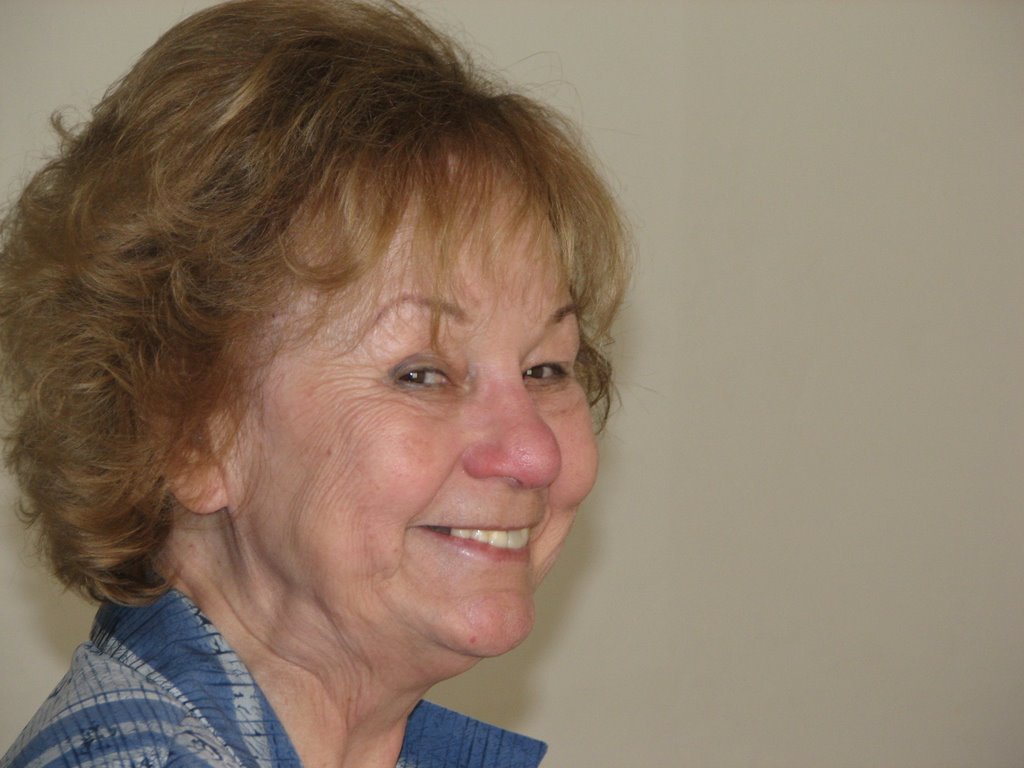
My mother, Dorothy Ruth Droddy, at 79.
Still going strong with style and grace. We went to a dinner dance two weeks ago and danced the night away. She still rocks and rolls. We went to Paris back in '97 where she proceeded to jitterbug on the stage at the Folies Bergere. Since dumping her last husband back in '87, she's been to Europe a dozen times, toured China with a friendship group, and has plans to go to Russia. She also continues to work full time as a tax preparer for H. & R. Block. I'm very proud of my mother.
Wednesday, May 10, 2006
Searching for my Mythical Indian Grandmother
I read somewhere once that a majority of Southerners have a family myth of a great-to-some-power, grandmother who was American Indian. We certainly had a myth of an Indian grandmother in our family. In fact, I lived with her.
I asked my grandmother point blank once if she was Indian. She said she wasn't but that her grandmother was. She knew her genealogy at least. I now assume she meant Melissa Drake. Melissa married the hired hand that worked for her father, John Drake Jr. Melissa only had one child, my grandmother's mother.
In my family, my grandmother existed on a semi-immortal plain. As I look back on her life and the amazing things she accomplished, I stand in absolute awe of her strength, her wisdom, her perseverance, of her stoicism.
We Redbones universally hold our grandmothers in very high esteem. That is certainly the most significant "tie that binds." In the last century, grandmothers were the focal point in all of my families. Elizabeth "Ma Bet" Miller in Lunita, Lonie Ashworth in Singer, Minnie Droddy in Vidor, to name the ones in my family. There were a lot more because my grandmother would go visit them all over East Texas and Western Louisiana. They were the center of the circle. They taught us the values upon which we would build our lives. They told us stories about our interconnectedness. They gave us the myth upon which we create our identity as Redbones.
Many American familes have an Indian grandmother myth, but in Redbone families, there really was one. Our Indian grandmothers did not know her tribe. That memory was lost generations before. All that remained was the dark skin, the long black hair, the Indian features. No, there was more than just the physical features of the American Indian, there was also a quiet spirituality.
I did not grow up hearing stories about Keziah Ashworth. I learned to venerate her as I studied her children and grandchildren. She may have been a mousy little nobody, but my imagination refuses to see her as anyone other than the grandmothers I knew while growing up in East Texas and Western Louisiana. As I imagine her children and grandchildren and the kinds of situations that inevitably arise from life on an often hostile frontier, I think I know her well.
Anna Bunch is another grandmother who has captured my imagination. She was widowed with five children. She moved back to Louisiana after Moses died. Her children all grew up and gave her dozens of grandchildren. I also imagine that my own great-great-grandfather was her favorite, being the baby and all, and I imagine that she lived out her final years with Thompson Lorraine and his wife Sarah, and that when she died in the mid-1850s, she was buried at Good Hope.
OT, but On Track
Redbone women have always felt themselves equal to men in terms of rights. Elizabeth Hill sued her children to compel them to support her in her old age. Rachel Drake put her property in trust to protect her children's inheritance. Mary Simmons divorced two husbands before 1900 because they didn't take their commitments to being a husband and father seriously enough to satisfy her. Keziah's granddaughter, Polly divorced Elisha Thomas in 1840.
Our mythological Indian grandmother remains vivid in our Redbone cultural memories. She taught us our sense of family. She sustained us in times of want and tribulation. As a native American, she would have been considered a savage by the first of our grandfathers to encounter her. It was the other way around, however. Our grandfathers that landed on these shores were a violent breed of man. It was our grandmothers who civilized our grandfathers. We know that by observing the nature of how the sexes interact from puberty, through courtship and into mature relationships.
Something to think about anyway. This is a piece in progress. Feel free to comment, argue, contradict, just do so nicely.
I read somewhere once that a majority of Southerners have a family myth of a great-to-some-power, grandmother who was American Indian. We certainly had a myth of an Indian grandmother in our family. In fact, I lived with her.
I asked my grandmother point blank once if she was Indian. She said she wasn't but that her grandmother was. She knew her genealogy at least. I now assume she meant Melissa Drake. Melissa married the hired hand that worked for her father, John Drake Jr. Melissa only had one child, my grandmother's mother.
In my family, my grandmother existed on a semi-immortal plain. As I look back on her life and the amazing things she accomplished, I stand in absolute awe of her strength, her wisdom, her perseverance, of her stoicism.
We Redbones universally hold our grandmothers in very high esteem. That is certainly the most significant "tie that binds." In the last century, grandmothers were the focal point in all of my families. Elizabeth "Ma Bet" Miller in Lunita, Lonie Ashworth in Singer, Minnie Droddy in Vidor, to name the ones in my family. There were a lot more because my grandmother would go visit them all over East Texas and Western Louisiana. They were the center of the circle. They taught us the values upon which we would build our lives. They told us stories about our interconnectedness. They gave us the myth upon which we create our identity as Redbones.
Many American familes have an Indian grandmother myth, but in Redbone families, there really was one. Our Indian grandmothers did not know her tribe. That memory was lost generations before. All that remained was the dark skin, the long black hair, the Indian features. No, there was more than just the physical features of the American Indian, there was also a quiet spirituality.
I did not grow up hearing stories about Keziah Ashworth. I learned to venerate her as I studied her children and grandchildren. She may have been a mousy little nobody, but my imagination refuses to see her as anyone other than the grandmothers I knew while growing up in East Texas and Western Louisiana. As I imagine her children and grandchildren and the kinds of situations that inevitably arise from life on an often hostile frontier, I think I know her well.
Anna Bunch is another grandmother who has captured my imagination. She was widowed with five children. She moved back to Louisiana after Moses died. Her children all grew up and gave her dozens of grandchildren. I also imagine that my own great-great-grandfather was her favorite, being the baby and all, and I imagine that she lived out her final years with Thompson Lorraine and his wife Sarah, and that when she died in the mid-1850s, she was buried at Good Hope.
OT, but On Track
Redbone women have always felt themselves equal to men in terms of rights. Elizabeth Hill sued her children to compel them to support her in her old age. Rachel Drake put her property in trust to protect her children's inheritance. Mary Simmons divorced two husbands before 1900 because they didn't take their commitments to being a husband and father seriously enough to satisfy her. Keziah's granddaughter, Polly divorced Elisha Thomas in 1840.
Our mythological Indian grandmother remains vivid in our Redbone cultural memories. She taught us our sense of family. She sustained us in times of want and tribulation. As a native American, she would have been considered a savage by the first of our grandfathers to encounter her. It was the other way around, however. Our grandfathers that landed on these shores were a violent breed of man. It was our grandmothers who civilized our grandfathers. We know that by observing the nature of how the sexes interact from puberty, through courtship and into mature relationships.
Something to think about anyway. This is a piece in progress. Feel free to comment, argue, contradict, just do so nicely.
Well, There Goes the Neighborhood
I was going to say "homeland" but there was a discussion in the Redbone Yahoo group between Gabe and Joyce about the true nature of homeland which I found persuasive. LV also took issue with it from a classic LV way of eviscerating something with pure facts. Did you know that James Ashworth didn't even make it to the Neutral Zone until after it was no longer the Neutral Zone? I didn't either. Anyways, "homeland" is a state of mind.
From my point of view all of Louisiana not on a major river was inaccessible and for people trying to stay away from others, it must have been very inviting. The point made by Gabe and Joyce was that "Homeland" is that place within our hearts and souls where our character is shaped and our memories are born. Point taken. If you even remotely consider yourself a Redbone, probably you do have a homeland. Mine was shaped along a creek that meanders through southwest Louisiana.
Which brings me the point of my heading. I got another letter from Bearhead yesterday. My homeland is for sale in small chunks. Terry said one developer was talking about buying some of those FEMA trailers and opening a trailer park for New Orleanian refugees who have been flung as widely across the Gulf Coast as the Acadians were in 1755. I know my Cajun cousins do not care for that analogy, but it's pretty spot on in my opinion.
One of the most romantic aspects to the land around Bearhead is that it has been owned my major lumber companies since the late 1890s and they have been content to use the land to grow trees. Tree gardens don't need fences, and Redbone cattle grazed freely over thousands and thousands of acres, just like it must have in nineteenth century Texas. When we played or rode horses, we had thousands of acres of manicured forest in which to play. You can understand why it's so easy for me to romanticize it.
But I digress. Cousins! The homeland is being sold out from under us to, god forbid, DEVELOPERS! I know progress isn't bad necessarily. I mean, if it were my farm and WalMart wanted it for a store, I'd sell and move farther back into the woods, but what are we going to do when we run out of woods?
Maybe we should all try to buy a piece of it. I'd lead the charge myself, but... Thomas Wolfe, the great American writer, said you can't go home again. Afterall, I just wrote that home is a more of a mystical place where we are shaped. You can't go back there. It ain't there no more. Besides, I've been living in the city now for 40 years. I don't think my back could take having to keep up an acre, much less 20 or 40. That pioneering stuff is for younger men and women.
Just thinking about Good Hope Cemetery sitting between a trailer park filled with urban poor from New Orleans and a strip mall conjures up images that makes me want to cry. I'm glad Gabe and Joyce convinced me to remember that a homeland is more of a state of mind, because Bearhead as I knew it is about to become a memory.
My "state of mind" is getting a headache.
I was going to say "homeland" but there was a discussion in the Redbone Yahoo group between Gabe and Joyce about the true nature of homeland which I found persuasive. LV also took issue with it from a classic LV way of eviscerating something with pure facts. Did you know that James Ashworth didn't even make it to the Neutral Zone until after it was no longer the Neutral Zone? I didn't either. Anyways, "homeland" is a state of mind.
From my point of view all of Louisiana not on a major river was inaccessible and for people trying to stay away from others, it must have been very inviting. The point made by Gabe and Joyce was that "Homeland" is that place within our hearts and souls where our character is shaped and our memories are born. Point taken. If you even remotely consider yourself a Redbone, probably you do have a homeland. Mine was shaped along a creek that meanders through southwest Louisiana.
Which brings me the point of my heading. I got another letter from Bearhead yesterday. My homeland is for sale in small chunks. Terry said one developer was talking about buying some of those FEMA trailers and opening a trailer park for New Orleanian refugees who have been flung as widely across the Gulf Coast as the Acadians were in 1755. I know my Cajun cousins do not care for that analogy, but it's pretty spot on in my opinion.
One of the most romantic aspects to the land around Bearhead is that it has been owned my major lumber companies since the late 1890s and they have been content to use the land to grow trees. Tree gardens don't need fences, and Redbone cattle grazed freely over thousands and thousands of acres, just like it must have in nineteenth century Texas. When we played or rode horses, we had thousands of acres of manicured forest in which to play. You can understand why it's so easy for me to romanticize it.
But I digress. Cousins! The homeland is being sold out from under us to, god forbid, DEVELOPERS! I know progress isn't bad necessarily. I mean, if it were my farm and WalMart wanted it for a store, I'd sell and move farther back into the woods, but what are we going to do when we run out of woods?
Maybe we should all try to buy a piece of it. I'd lead the charge myself, but... Thomas Wolfe, the great American writer, said you can't go home again. Afterall, I just wrote that home is a more of a mystical place where we are shaped. You can't go back there. It ain't there no more. Besides, I've been living in the city now for 40 years. I don't think my back could take having to keep up an acre, much less 20 or 40. That pioneering stuff is for younger men and women.
Just thinking about Good Hope Cemetery sitting between a trailer park filled with urban poor from New Orleans and a strip mall conjures up images that makes me want to cry. I'm glad Gabe and Joyce convinced me to remember that a homeland is more of a state of mind, because Bearhead as I knew it is about to become a memory.
My "state of mind" is getting a headache.
Wednesday, May 03, 2006
Homeland
I've used this term several times to describe the Bearhead Creek area between Singer and Starks, Louisiana, and have been politely corrected a couple of times for it. LV took me to task saying that neither Starks nor Singer were there until late 19th century. I should have included the entire Neutral Zone which came into being after the 1803 Louisiana Purchase when the American and Spanish generals decided not to start a war over the differing claims of Spain and the United States as to the western border of Louisiana. The Americans claimed to the west bank of the Sabine River. The Spanish thought it was the Calcasieu River. As a result of their decision, the area between those two rivers became a haven of outlaws, slave smugglers, and Redbones who seemed to prefer the ambiguity of the Neutral Zone to the racial codes in the rest of Louisiana and the South.
After Moses Ashworth was killed in the early 1830s, his widow, Anna, took her kids and went back to there, probably to be closer to her parents, Drury and Rhoda Bunch. When the Texans went after us in Jefferson County, Texas in 1856, those family members who were forced from their homes came back as well.
Maybe the Neutral Zone isn't the homeland for some of our extended families's memories. If home is where you're always welcome, then for my several branches of Redbone Families, the Neutral Zone has been our home for almost two hundred years. That's about as close as we're going to get to having a homeland. Texas has never been a haven for Redbones. Home to many Redbones, yes indeed, but not a welcoming place nor a place of refuge. That distinction goes to Louisiana.
This is also where our families began to have a group identity. There is disagreement about whether we were an identifiable group in South Carolina that decided to migrate together or whether the families came independently as family groups, several at a time. It seems certain that by the late 1800s, whether or not our families saw each other as related in any way other than family ties, the dominant White culture did see us as an identifiable group and was calling us Redbones. Judging from the reaction of my great-grandfather, Amos, and his brothers Austin and Dempsey, and Old Josh Perkins, the word was considered offensive. Was it the word they found offensive, or was it being lumped into a group with whom they felt no identity or kinship? I'm betting it was the word. There is evidence that the dominant White culture did not necessarily consider it an offensive word though. In Don Marler's book about Redbones, there is a lettter from a newspaper editor in Lake Charles to Dr. Furman in South Carolina who was studying the South Carolina Redbones and was attempting to link the two people. In the letter, he used the term Redbone in a descriptive way and not derogatorily.
For the past couple of years I have tried to refrain from using it based on my family history and experience. I never heard my grandmother use it. I never heard any of my aunts or uncles use it. My mother dislikes the word, but I believe she is more uncomfortable with being considered a Redbone than she is by the word itself. A younger generation of family members proudly think of themselves as Redbones. Being outnumbered and outvoted, I'm capitulating. Even though my mother isn't a Redbone, I am and I will use the word in my stories again. I'd like to thank those of you who have taken the time to give me your opinions. I've learned a lot from your stories.
I've used this term several times to describe the Bearhead Creek area between Singer and Starks, Louisiana, and have been politely corrected a couple of times for it. LV took me to task saying that neither Starks nor Singer were there until late 19th century. I should have included the entire Neutral Zone which came into being after the 1803 Louisiana Purchase when the American and Spanish generals decided not to start a war over the differing claims of Spain and the United States as to the western border of Louisiana. The Americans claimed to the west bank of the Sabine River. The Spanish thought it was the Calcasieu River. As a result of their decision, the area between those two rivers became a haven of outlaws, slave smugglers, and Redbones who seemed to prefer the ambiguity of the Neutral Zone to the racial codes in the rest of Louisiana and the South.
After Moses Ashworth was killed in the early 1830s, his widow, Anna, took her kids and went back to there, probably to be closer to her parents, Drury and Rhoda Bunch. When the Texans went after us in Jefferson County, Texas in 1856, those family members who were forced from their homes came back as well.
Maybe the Neutral Zone isn't the homeland for some of our extended families's memories. If home is where you're always welcome, then for my several branches of Redbone Families, the Neutral Zone has been our home for almost two hundred years. That's about as close as we're going to get to having a homeland. Texas has never been a haven for Redbones. Home to many Redbones, yes indeed, but not a welcoming place nor a place of refuge. That distinction goes to Louisiana.
This is also where our families began to have a group identity. There is disagreement about whether we were an identifiable group in South Carolina that decided to migrate together or whether the families came independently as family groups, several at a time. It seems certain that by the late 1800s, whether or not our families saw each other as related in any way other than family ties, the dominant White culture did see us as an identifiable group and was calling us Redbones. Judging from the reaction of my great-grandfather, Amos, and his brothers Austin and Dempsey, and Old Josh Perkins, the word was considered offensive. Was it the word they found offensive, or was it being lumped into a group with whom they felt no identity or kinship? I'm betting it was the word. There is evidence that the dominant White culture did not necessarily consider it an offensive word though. In Don Marler's book about Redbones, there is a lettter from a newspaper editor in Lake Charles to Dr. Furman in South Carolina who was studying the South Carolina Redbones and was attempting to link the two people. In the letter, he used the term Redbone in a descriptive way and not derogatorily.
For the past couple of years I have tried to refrain from using it based on my family history and experience. I never heard my grandmother use it. I never heard any of my aunts or uncles use it. My mother dislikes the word, but I believe she is more uncomfortable with being considered a Redbone than she is by the word itself. A younger generation of family members proudly think of themselves as Redbones. Being outnumbered and outvoted, I'm capitulating. Even though my mother isn't a Redbone, I am and I will use the word in my stories again. I'd like to thank those of you who have taken the time to give me your opinions. I've learned a lot from your stories.
Thursday, April 27, 2006
Outhouse Stories
Before my grandmother got indoor plumbing, we had to use an outhouse out beyond the chicken yard. Do people even have chicken yards anymore? We had one then. During the day this was precarious enough, given the obstacles. What obstacles you ask? Well, mean roosters for one. My grandma had an old Rhode Island Red rooster that wasn't afraid of dogs or kids. That damn thing attacked me enough times that I started carrying a stick.

This picture must have been taken sometime in the 40s. Sitting are Bud and Minnie Droddy, with their boys behind them: left to right: Addis, I.T., and Pert. Behind them is the house my grandpa built with the help of the boys and other members of the family.
The second obstacle of terror was chicken shit. Like so many kids growing up in rural East Texas and Western Louisiana, shoes were something worn (1) to church, (2) to school, or (3) on cold days in the Winter. As a child, there were two things I feared more than death. First, stepping in chicken shit, and second, kicking over my grandmother's snuff can. Oh, lord save me from either of those.
During daylight hours, the best defense against chicken shit was alertness. Tell that to a six-year-old. My vigilence didn't usually begin until after I'd stepped in a pile of it, and then didn't last but a week or so. That was during daylight hours.
Nighttime brought a whole new bag of terror. While the rooster was shut away in the hen house, there was still the obstacle course of chicken shit to negotiate in the dark! If you woke up in the middle of the night and had to go, there was a slop jar, sometimes called a honeybucket by more refined folk, but it had to be late at night or the weather had to be bad to use the slop jar. Let me tell you what, I learned control very early on.
Once in the outhouse, a whole new set of terrors emerged: spiders and snakes. Reckon there's such a thing as "outhouse phobia"? I'll tell you one result: to this day, I am the world's fastest when it comes to taking care of business, if you catch my drift. I am in an out in about three minutes, maximum.
Toilets came in several sizes. There were one-seaters, two-seaters, and even occasional three-seaters. I guess we were a lot more social in our business back in those days. Toilet paper existed, of course, but when you're as poor as we were, improvisation was often necessary That's where the Sears and Roebuck catalogue came in. Not the best toilet paper in the world, in fact, it ain't even the second or third best. Some people talk about dried corn cobs, but I guess we were richer than they were.
Indoor plumbing came to mama's house in 1957. Her old 4-room house built by my grandfather in the late 30s or early 40s, was deemed dangerous by my uncle I.T., so mama got a Downey Brothers house built for $5400. We were finally rich. My prayers finally had been answered. No more outhouses.
I'm Back
I haven't written much this past year or so due to other priorities. This blog gets a lot of traffic as a result of internet searches, and occasionally I get emails from distant cousins looking to connect their family lines to our core families. Those are the more gratifying. Sometimes I get emails telling me to go to hell, or calling me an asshole, some even telling me to go f--k myself. I know I must be doing something right when I get those kind.
When I started writing this blog, my hope was to remember as many stories from my grandmother that I could, and was hoping that my memory of stories would trigger the memories of others. If you remember one detail as a result of any of the stories here, then I have done well. My mother's people were illiterate for the first 150 years of their history. As a result, we don't have as many details about their lives as we might like to have. We have to resort more to oral history which gets changed with each telling. Add to that television and movies, internet legends and such, and our oral history is now so badly distorted that very little truth remains.
I don't think it matters ultimately. We Southerners are gifted storytellers. Even if much of what we remember and tell is more myth than truth, it is still shaped by our memories of our grandparents and the values we inherited from them. Many of our new stories may not be as accurate as they should be, but we tell the stories we have, not the ones we wish we had.
I have a few more tales and memories to go.
Tuesday, August 23, 2005
Changes
Along with changing the blog's name, I've also changed my focus. From now on I'm primarily interested in the history and genealogy of the Droddys, Ashworths, Perkins, Bunch, Bass, Johnson and Dial. There are plenty of other researchers out there equipped to do a better job worrying about the interconnectedness of the other families than am I. Good luck to them.
Part of my reason for changing focus is my evolving understanding of what or who is a Redbone. I'm glad we had the conversation, but I suspect we're all walking away with different conclusions. I tend to believe with my cousins that (1) the word is a racial slur, and (2) it's about the experience. If you grew up outside of the community, then you're not, but (3) you can call yourself anything you want; you just don't have the right to decide for anyone else.
Me? I'm going to be talking about my mother's people.
Along with changing the blog's name, I've also changed my focus. From now on I'm primarily interested in the history and genealogy of the Droddys, Ashworths, Perkins, Bunch, Bass, Johnson and Dial. There are plenty of other researchers out there equipped to do a better job worrying about the interconnectedness of the other families than am I. Good luck to them.
Part of my reason for changing focus is my evolving understanding of what or who is a Redbone. I'm glad we had the conversation, but I suspect we're all walking away with different conclusions. I tend to believe with my cousins that (1) the word is a racial slur, and (2) it's about the experience. If you grew up outside of the community, then you're not, but (3) you can call yourself anything you want; you just don't have the right to decide for anyone else.
Me? I'm going to be talking about my mother's people.
Friday, April 29, 2005
Cold Mountain, the book
by Charles Frazier. Anyone out there who imagines himself or herself to be a Redbone would do well to read this book. Speaking for myself, I was not taught the history of the South, but rather, I was taught the Myth of the South. There's a helluva lot of difference. Most of our ancestors avoided the Civil War. Some of the bucks in Texas who never accepted nor understood why they were rejected by their White neighbors, joined the Confederate Army, but most of our ancestors just stayed home and avoided the Home Guard. Some even worked with the opposition. Ask Don Marler about Copperheads.
Major Samuel Ragsdale inherited a batallion from Lt. Col. Andrew Daly. He aggressively recruited groups previously ignored: Cajuns and Redbones. Most of the Redbones who served in the Confederate Army served with Samuel Ragsdale. I'm sure he promised them acceptance as Whites after the Civil War. What other reason would have motivated them to join the forces of a political idea that saw them as inferior?
My line of Ashworths stayed in the swamps and kept on with their lives. I think that any present day Redbones who finds pride in the Southern "noble cause" to be about the same as someone who brags about his grandparents being mentally retarded. Hello?
Read Cold Mountain, and then come back and tell me how proud you are of your ancestors who were stupid. Come back and tell me about it, if you don't mind. I can't promise I won't make fun of you behind your back, but I do promise to be polite about in public. Send me an email or post in the comments here. Oh come on, now. I already make fun of most of you, which is helluva lot kinder on my part than most of you are towards me.
The South sucks. It always has. It treated our people like shit, just about the way you now treat homosexuals. Just as you wrap yourself in your half-assed, ignorant understanding of THE BIBLE, Southerners used to preach about how we, your Redbone ancestors, were less than human and justified it with that same Bible.
Here's an old Redbone saying for you to ponder: "Fool me once, shame on you. Fool me twice, shame on me."
At the time of the Civil War, Southerners considered Redbones to be just another bunch of niggers. Nowadays, it's not so much about race as it is economic class, and let me tell you, most of you fools have digressed in social standing.
That's just my opinion. If your opinion is different, speak up. Write a comment, or better yet, start your own damn blog.
by Charles Frazier. Anyone out there who imagines himself or herself to be a Redbone would do well to read this book. Speaking for myself, I was not taught the history of the South, but rather, I was taught the Myth of the South. There's a helluva lot of difference. Most of our ancestors avoided the Civil War. Some of the bucks in Texas who never accepted nor understood why they were rejected by their White neighbors, joined the Confederate Army, but most of our ancestors just stayed home and avoided the Home Guard. Some even worked with the opposition. Ask Don Marler about Copperheads.
Major Samuel Ragsdale inherited a batallion from Lt. Col. Andrew Daly. He aggressively recruited groups previously ignored: Cajuns and Redbones. Most of the Redbones who served in the Confederate Army served with Samuel Ragsdale. I'm sure he promised them acceptance as Whites after the Civil War. What other reason would have motivated them to join the forces of a political idea that saw them as inferior?
My line of Ashworths stayed in the swamps and kept on with their lives. I think that any present day Redbones who finds pride in the Southern "noble cause" to be about the same as someone who brags about his grandparents being mentally retarded. Hello?
Read Cold Mountain, and then come back and tell me how proud you are of your ancestors who were stupid. Come back and tell me about it, if you don't mind. I can't promise I won't make fun of you behind your back, but I do promise to be polite about in public. Send me an email or post in the comments here. Oh come on, now. I already make fun of most of you, which is helluva lot kinder on my part than most of you are towards me.
The South sucks. It always has. It treated our people like shit, just about the way you now treat homosexuals. Just as you wrap yourself in your half-assed, ignorant understanding of THE BIBLE, Southerners used to preach about how we, your Redbone ancestors, were less than human and justified it with that same Bible.
Here's an old Redbone saying for you to ponder: "Fool me once, shame on you. Fool me twice, shame on me."
At the time of the Civil War, Southerners considered Redbones to be just another bunch of niggers. Nowadays, it's not so much about race as it is economic class, and let me tell you, most of you fools have digressed in social standing.
That's just my opinion. If your opinion is different, speak up. Write a comment, or better yet, start your own damn blog.
Thursday, March 31, 2005
Re-Reading Marler on Redbones
I used to think Don Marler was the most knowledgeable person I knew on the subject of Redbones. A cousin, LV Hayes, is the most knowledgeable person I know in terms of our interconnectedness. He knows how we're all related. LV has been very stingy with his opinion about who he thinks is or is not a Redbone, in part, I believe, because he does not like the word Redbone and thinks people distantly related to its real meaning who find some sort of misguided pride in the idea to be idiots. I agree with him in part.
Don's book is the only one written about our families, thus far, and it was self-published, which means it was never vetted by anyone with critical knowledge about the subject. The Redbone Heritage Foundation is Don's baby. The main problem with Don's book is that he's willing to call anyone with an Indian grandmother tradition in Louisiana a Redbone. We Redbones know better.
It is noted that none of the present members of the Redbone Heritage Foundation have made any attempts at connecting with their dark, but distant cousins in Starks and Singer. Those Redbones would be my cousins.
Back to Don's book. There are a couple of areas that I thought inconclusive and felt that he made more of an issue than I thought was there. The connection between the "Redbones" of South Carolina and the "Redbones" of Louisiana was very weak. The only connection I saw was the similarity of circumstance and choice of word used by Whites.
My next issue is similar. He would make the Melungeon connection more than it is. Rhoda Mosely and Drury Bunch are thought be from Kentucky because of a census wherein they said that's where they were from. They were considered by the census taker to be not-White. Were they Melungeon? Were Melungeons a self-identified sub-group in 1840? Probably, but not conclusively. Their daughters, Anna and Mary, went on to be grandmothers of large and powerful clans. That did not make their dozens of grandchildren Melungeon. No more than Keziah make her dozens of grandchildren Indian.
My theory? If you can call it that. Their self-identify evolved just as the racial codification intensified. It took at least two generations for them to think of similarly situated people as kindred spirits. The social-anthropological question is how many generations of a group being separate is required to make the group a "people." They began as a group from many areas with many different experiences. Some had supported the American Revolution, some apparently didn't. There may be a pattern showing how they cooperated as a group and not just as cousins, but it hasn't manifested itself to me, yet. We are not a people united by a culture, we're just a borderline racial mix who continue to identify with cousins, just as their ancestors did 200 years ago. There may be an acknowledgement as between two people who identify an ill-defined kinship, but there is no value given that similarity of circumstance.
I think Marler wants to make their interactions more than they were. What Don would call "Redbones" I would call "similarly situated, mixed-race people who were White-identified, but who obviously were dark complexioned and therefore not accepted as White." "Redbone" is a more efficient word. They did not, in my opinion, ever identify with each other because of the particularness of their circumstance. I don't think the girls in Starks thought of the girls in Pitkin as members of the same tribe, just different high schools. Anyone with experience here, just weigh in.
Okay, you idiots at the Redbone Heritage Foundation, read my lips here. I'm saying outloud what others are saying about you. I just happen to have a pulpit. You can continue to ignore me and call me names amongst yourselves. That just proves you're a bunch of idiots. You still don't have any Redbones in your group, so you need to figure out a way to reach out to actual Redbones. Why is that so difficult for you to grasp?
You people are a bunch of idiots. Sorry, but you're going to need to start over.
My problem with the word "Redbone" is that it is an offensive word to many in that community. It was never our choice of descriptive adjectives. It was a word used by Whites to describe us. We never used the word in a positive way before about 1980. When my cousins and I used it, we did not use it in front of our parents. Even today, if you called my mother a Redbone, she'd slap you.
Maybe we do need to reclaim the word, but it's not for a bunch of "Wannabes" to tell those of us who are still dark anything.
I don't know about the rest of you, but I'm celebrating our Two Hundredth Anniversary of being in Texas and Louisiana. We are kick ass people!
I used to think Don Marler was the most knowledgeable person I knew on the subject of Redbones. A cousin, LV Hayes, is the most knowledgeable person I know in terms of our interconnectedness. He knows how we're all related. LV has been very stingy with his opinion about who he thinks is or is not a Redbone, in part, I believe, because he does not like the word Redbone and thinks people distantly related to its real meaning who find some sort of misguided pride in the idea to be idiots. I agree with him in part.
Don's book is the only one written about our families, thus far, and it was self-published, which means it was never vetted by anyone with critical knowledge about the subject. The Redbone Heritage Foundation is Don's baby. The main problem with Don's book is that he's willing to call anyone with an Indian grandmother tradition in Louisiana a Redbone. We Redbones know better.
It is noted that none of the present members of the Redbone Heritage Foundation have made any attempts at connecting with their dark, but distant cousins in Starks and Singer. Those Redbones would be my cousins.
Back to Don's book. There are a couple of areas that I thought inconclusive and felt that he made more of an issue than I thought was there. The connection between the "Redbones" of South Carolina and the "Redbones" of Louisiana was very weak. The only connection I saw was the similarity of circumstance and choice of word used by Whites.
My next issue is similar. He would make the Melungeon connection more than it is. Rhoda Mosely and Drury Bunch are thought be from Kentucky because of a census wherein they said that's where they were from. They were considered by the census taker to be not-White. Were they Melungeon? Were Melungeons a self-identified sub-group in 1840? Probably, but not conclusively. Their daughters, Anna and Mary, went on to be grandmothers of large and powerful clans. That did not make their dozens of grandchildren Melungeon. No more than Keziah make her dozens of grandchildren Indian.
My theory? If you can call it that. Their self-identify evolved just as the racial codification intensified. It took at least two generations for them to think of similarly situated people as kindred spirits. The social-anthropological question is how many generations of a group being separate is required to make the group a "people." They began as a group from many areas with many different experiences. Some had supported the American Revolution, some apparently didn't. There may be a pattern showing how they cooperated as a group and not just as cousins, but it hasn't manifested itself to me, yet. We are not a people united by a culture, we're just a borderline racial mix who continue to identify with cousins, just as their ancestors did 200 years ago. There may be an acknowledgement as between two people who identify an ill-defined kinship, but there is no value given that similarity of circumstance.
I think Marler wants to make their interactions more than they were. What Don would call "Redbones" I would call "similarly situated, mixed-race people who were White-identified, but who obviously were dark complexioned and therefore not accepted as White." "Redbone" is a more efficient word. They did not, in my opinion, ever identify with each other because of the particularness of their circumstance. I don't think the girls in Starks thought of the girls in Pitkin as members of the same tribe, just different high schools. Anyone with experience here, just weigh in.
Okay, you idiots at the Redbone Heritage Foundation, read my lips here. I'm saying outloud what others are saying about you. I just happen to have a pulpit. You can continue to ignore me and call me names amongst yourselves. That just proves you're a bunch of idiots. You still don't have any Redbones in your group, so you need to figure out a way to reach out to actual Redbones. Why is that so difficult for you to grasp?
You people are a bunch of idiots. Sorry, but you're going to need to start over.
My problem with the word "Redbone" is that it is an offensive word to many in that community. It was never our choice of descriptive adjectives. It was a word used by Whites to describe us. We never used the word in a positive way before about 1980. When my cousins and I used it, we did not use it in front of our parents. Even today, if you called my mother a Redbone, she'd slap you.
Maybe we do need to reclaim the word, but it's not for a bunch of "Wannabes" to tell those of us who are still dark anything.
I don't know about the rest of you, but I'm celebrating our Two Hundredth Anniversary of being in Texas and Louisiana. We are kick ass people!
Tuesday, March 01, 2005
My Bones are Red, the book by Patricia Ann Waak
The best I can say about it, is that it has a great title. The worst I can say about it is that she mixes her own brand of religion and spirituality into genealogy and uncritically accepts myths that support her conclusions.
Although she would be only about 1/8th Redbone if Redbone was a racially determined identity, she claims a larger spiritual identity with Redbones, or at least with her father's family, decendants of Leonard Perkins, the son of Old Josh Perkins. Also, she paints our Perkins ancestors with as black a brush she can. Maybe it's to express solidarity with her grandchildren whose fathers are African-American. I'm not sure we Redbones are all that willing to embrace our Blackness just yet. If I say there's nothing in the record that would prove our Blackness that would be accepted in a court of law today, I'd be accused of being in denial about it. But if we Perkins and Ashworths have so much Black in us, how come it doesn't pop up occasionally? Indian pops up a lot. White pops up a lot. Black hasn't popped up to my knowledge, unless it was reintroduced. Maybe you've seen otherwise, but I sure haven't seen anything that convinced me beyond a reasonable doubt.
Me, personally? I don't care. I'm more interested in their stories. Heinegg is a lot more accomplished a researcher than I and is probably a lot smarter, so maybe that's why he concluded Esther Perkins' baby was by a Black slave because she later named a child Dorcas and the guy who paid her fine owned a slave by the name of Dorcas. Could have happened that way. But if it did, the next several generations had better start marrying Indians because all the Perkins I know look a lot more Red than Yellow, if you catch my drift. Here's something I know from observation. The children of White and Black parents, DO NOT LOOK INDIAN.
I know this isn't scientific, but just look at us (those of us that are still dark, anyway). We do not look Black. We either look White or we look Indian. So tell me this much, Pat, if Old Josh married a White Scottish woman, a fact you accept in your book, why are their grandchildren being called Indians in the Texas census? Don't you think if your grandmother looked like a White-Black mulatto, that census taker would have marked the box Mulatto and not Indian?
I'm probably a lot more accepting of the idea of Black roots that almost every Redbone I know. The ones that say it don't matter are liars. Yeah, that's right. I called you a bunch of liars. Prove me wrong. Go to the First Pentecostal Church in either Starks or Singer and stand up and testify about how proud you are of your Black blood.
We Redbones are amongst the fiercest anti-Black racists I've ever encountered. Maybe that's what we were running from in North and South Carolina. I just want to know why the African disappeared so quickly from the blood. We certainly intermarried enough for it to pop up on a pretty regular basis.
Like I said, though. I'm alright with the theorhetical idea of an African ancestor. I'd just like to see the proof. I love Heinegg's conclusions regarding Esther Perkins. That's one of the grandmothers of my line. In fact, I think she's my grandmother about three or four different times. Is that possible? I know that James and Keziah are my ggggggrandparents twice. Lord, I'm probably my own third cousin, twice.
Heinegg had every librarian in the South helping him. I'm willing to accept many of his conclusions, but in theory. He showed me nothing that said Esther's sperm donor was African. And since her grandchildren and great-grandchildren sure as hell look Indian and not Black, if he was a slave, he must have been an Indian slave.
I could probably be shot down right now by someone very familiar with the Perkins Defamation suit in Tennessee. The people that gave depositions against J.F. Perkins were so blatantly racist that they tried their best to describe the Perkins as a bunch of Negroes. The thing is, all those White people who had married a Perkins sure as hell didn't think they looked Black.
My Ashworths are all dark, but then again, all my Ashworths are also Perkins. The record suggests they started out dark, the Ashworths I mean. That reference in the book about the South Carolina Regulators said that he was dark haired and had swarthy skin. Did that mean a good tan? There's so many unknown factors there that any conclusion is just guessing. Each day we learn more. That's very exciting.
If I'm in denial about it, then I stand in solidarity with my ancestors who for 250 years have struggled not to be unfairly burdened with a racial epithet not of their own choosing. If I have eight great-grandparents and one of them is rumored to be Black, three are rumored to be Indian, and four are White. What am I? In 1836 Texas I would be Black. It would be up to me to prove the non-existence of the Black and Indian great-grandparents. Anybody who's done any genealogy knows how difficult it is to prove anything in the 17th and 18th century, must less disprove something. It's my theory that we're more likely to be Indian mix because available Black women belonged to someone who didn't go around farming out their women to recent immigrants from England. Heinegg's theory about Esther's children notwithstanding, but please, Paul, show us more proof than just conjecture and conclusion.
The race discussion is central and germaine to any discussion about Redbones. It is the camel in our tent. I do know if you bring up the Black angle with most of my cousins in Louisiana, you're going to lose them as an audience. They're going to tune you out completely, if they don't slug you for suggesting they're part Black. Pat even goes so far as to suggest that our cattle instincts are from Africa. She short shrifts the obvious Indian in our genes and jumps to make us Fulani or Masai because we were cattle herders. Even though her sperm donor didn't leave us a name, he did manage to give his cattle herding instincts to his Indian-looking children.
That makes two books out about Redbones to my knowledge. Don Marler's Louisiana Redbones is still the most definitive thus far. I'm hoping for a few more in the future. The part of the story that most fascinates me and about which I would like to write someday, is the early Texas experience. The more books about Redbones, Perkins, Goins, Ashworths, etc., the better my foundation for writing about our families' experiences in Texas.
We're not in competition with each other to get these stories out. If ten of us line up and tell our story, there will be ten different stories.
Now a side note. Lucille Perkins Robinson has just published a book about her family. It's called The Descendents of Chester Allen Perkins & Ora Lee Johnson. The Perkins connection is obvious, the less obvious is that Ora Lee Johnson is the granddaughter of Winna Droddy and William "Red" Strother, and the great-granddaughter of Adna Samuel Droddy, Sr., my great-great-grandfather. I can't recommend it highly enough. She has captured the flavor of Chester and Ora Lee's legacy in the stories of their children and grand-children. She mixes old obituaries with pictures of the next generation of this family.
Lucille is an incredible woman in the greatest tradition of Redbone women. I am honored to call her cousin. She lives in Rayne, Louisiana. If you Wannabes and Usetobes want to actually meet real Redbones when you're meeting in Alexandria, go visit Lucille, and buy her book while you're there. It may not tell you anything you don't already know, but it'll show you some pictures of some of your Redbone cousins who are still Redbones.
The best I can say about it, is that it has a great title. The worst I can say about it is that she mixes her own brand of religion and spirituality into genealogy and uncritically accepts myths that support her conclusions.
Although she would be only about 1/8th Redbone if Redbone was a racially determined identity, she claims a larger spiritual identity with Redbones, or at least with her father's family, decendants of Leonard Perkins, the son of Old Josh Perkins. Also, she paints our Perkins ancestors with as black a brush she can. Maybe it's to express solidarity with her grandchildren whose fathers are African-American. I'm not sure we Redbones are all that willing to embrace our Blackness just yet. If I say there's nothing in the record that would prove our Blackness that would be accepted in a court of law today, I'd be accused of being in denial about it. But if we Perkins and Ashworths have so much Black in us, how come it doesn't pop up occasionally? Indian pops up a lot. White pops up a lot. Black hasn't popped up to my knowledge, unless it was reintroduced. Maybe you've seen otherwise, but I sure haven't seen anything that convinced me beyond a reasonable doubt.
Me, personally? I don't care. I'm more interested in their stories. Heinegg is a lot more accomplished a researcher than I and is probably a lot smarter, so maybe that's why he concluded Esther Perkins' baby was by a Black slave because she later named a child Dorcas and the guy who paid her fine owned a slave by the name of Dorcas. Could have happened that way. But if it did, the next several generations had better start marrying Indians because all the Perkins I know look a lot more Red than Yellow, if you catch my drift. Here's something I know from observation. The children of White and Black parents, DO NOT LOOK INDIAN.
I know this isn't scientific, but just look at us (those of us that are still dark, anyway). We do not look Black. We either look White or we look Indian. So tell me this much, Pat, if Old Josh married a White Scottish woman, a fact you accept in your book, why are their grandchildren being called Indians in the Texas census? Don't you think if your grandmother looked like a White-Black mulatto, that census taker would have marked the box Mulatto and not Indian?
I'm probably a lot more accepting of the idea of Black roots that almost every Redbone I know. The ones that say it don't matter are liars. Yeah, that's right. I called you a bunch of liars. Prove me wrong. Go to the First Pentecostal Church in either Starks or Singer and stand up and testify about how proud you are of your Black blood.
We Redbones are amongst the fiercest anti-Black racists I've ever encountered. Maybe that's what we were running from in North and South Carolina. I just want to know why the African disappeared so quickly from the blood. We certainly intermarried enough for it to pop up on a pretty regular basis.
Like I said, though. I'm alright with the theorhetical idea of an African ancestor. I'd just like to see the proof. I love Heinegg's conclusions regarding Esther Perkins. That's one of the grandmothers of my line. In fact, I think she's my grandmother about three or four different times. Is that possible? I know that James and Keziah are my ggggggrandparents twice. Lord, I'm probably my own third cousin, twice.
Heinegg had every librarian in the South helping him. I'm willing to accept many of his conclusions, but in theory. He showed me nothing that said Esther's sperm donor was African. And since her grandchildren and great-grandchildren sure as hell look Indian and not Black, if he was a slave, he must have been an Indian slave.
I could probably be shot down right now by someone very familiar with the Perkins Defamation suit in Tennessee. The people that gave depositions against J.F. Perkins were so blatantly racist that they tried their best to describe the Perkins as a bunch of Negroes. The thing is, all those White people who had married a Perkins sure as hell didn't think they looked Black.
My Ashworths are all dark, but then again, all my Ashworths are also Perkins. The record suggests they started out dark, the Ashworths I mean. That reference in the book about the South Carolina Regulators said that he was dark haired and had swarthy skin. Did that mean a good tan? There's so many unknown factors there that any conclusion is just guessing. Each day we learn more. That's very exciting.
If I'm in denial about it, then I stand in solidarity with my ancestors who for 250 years have struggled not to be unfairly burdened with a racial epithet not of their own choosing. If I have eight great-grandparents and one of them is rumored to be Black, three are rumored to be Indian, and four are White. What am I? In 1836 Texas I would be Black. It would be up to me to prove the non-existence of the Black and Indian great-grandparents. Anybody who's done any genealogy knows how difficult it is to prove anything in the 17th and 18th century, must less disprove something. It's my theory that we're more likely to be Indian mix because available Black women belonged to someone who didn't go around farming out their women to recent immigrants from England. Heinegg's theory about Esther's children notwithstanding, but please, Paul, show us more proof than just conjecture and conclusion.
The race discussion is central and germaine to any discussion about Redbones. It is the camel in our tent. I do know if you bring up the Black angle with most of my cousins in Louisiana, you're going to lose them as an audience. They're going to tune you out completely, if they don't slug you for suggesting they're part Black. Pat even goes so far as to suggest that our cattle instincts are from Africa. She short shrifts the obvious Indian in our genes and jumps to make us Fulani or Masai because we were cattle herders. Even though her sperm donor didn't leave us a name, he did manage to give his cattle herding instincts to his Indian-looking children.
That makes two books out about Redbones to my knowledge. Don Marler's Louisiana Redbones is still the most definitive thus far. I'm hoping for a few more in the future. The part of the story that most fascinates me and about which I would like to write someday, is the early Texas experience. The more books about Redbones, Perkins, Goins, Ashworths, etc., the better my foundation for writing about our families' experiences in Texas.
We're not in competition with each other to get these stories out. If ten of us line up and tell our story, there will be ten different stories.
Now a side note. Lucille Perkins Robinson has just published a book about her family. It's called The Descendents of Chester Allen Perkins & Ora Lee Johnson. The Perkins connection is obvious, the less obvious is that Ora Lee Johnson is the granddaughter of Winna Droddy and William "Red" Strother, and the great-granddaughter of Adna Samuel Droddy, Sr., my great-great-grandfather. I can't recommend it highly enough. She has captured the flavor of Chester and Ora Lee's legacy in the stories of their children and grand-children. She mixes old obituaries with pictures of the next generation of this family.
Lucille is an incredible woman in the greatest tradition of Redbone women. I am honored to call her cousin. She lives in Rayne, Louisiana. If you Wannabes and Usetobes want to actually meet real Redbones when you're meeting in Alexandria, go visit Lucille, and buy her book while you're there. It may not tell you anything you don't already know, but it'll show you some pictures of some of your Redbone cousins who are still Redbones.
Thursday, January 06, 2005
LV Hayes has commented (scroll to bottom of page)on a couple of my posts. His comments are very important to the discussion about who and what is a Redbone. This is what LV has to say:
There are two points being made in his comment. The first, regarding the founding of the towns of Singer, DeQuincy, DeRidder, and Starks. I referred to them as Redbone homelands in a post. In doing so, I took romantic license. Those present day towns did not exist in the first three-quarters of the nineteenth century. Our ancestors were there, however, even before the beginning of the 19th century. For two hundred years they have lived in that general area. That is the heartland of our stories, our genealogy, our cemeteries. The towns are Redbone towns, because they were founded by Redbones as towns, not as Redbone towns, but towns.
I consider myself a Redbone. I do not consider it to be a racial term, but rather a code word for a collection of experiences unique to my ancestors with a racial factor.
There is no argument but that our ancestral families were considered non-White by the dominant society upon their arrival in Louisiana between 1787 and 1810. Although the brothers James and Moses were considered White in the 1800 census in South Carolina, in 1810 they and their families were considered FMC (Free Men of Color). We've always pointed to that fact to demonstrate the arbitrariness of the racial classifications. I think it's obvious that we considered ourselves White. Look at the many incidents of our people marrying outside of our group. In every instance we know about, Redbones married Whites. I have not seen a single instance where a Redbone married a nonWhite who was not also a Redbone. I think its obvious that most of our White neighbors also considered us White, dark white, but White. Letitia Stewart and Henderson Ashworth no doubt fought for their marriage to be recognized because they were in disbelief. We were successful in Texas in large part because we accumulated wealth during a time when there were no racial constraints on our competition with everyone else. The Mexicans considered us Americans and treated us like they treated all Americans. There was no point in law about Whites coming first.
As Texas rebelled against Mexico, 0ur ancestors lined up with the other American colonists to resist the Mexicans. When those Ashworth and Thomas boys were refused by the militia, it was a precursor of the grief that was to come from the Texans and they began adopting the Color Codes like the rest of the slave owning Southern states. After 1836, we clashed repeatedly with a dominant White society that insisted our families were Free Black. We didn't agree to it then, just as we don't agree with it now. We have never accepted without dispute the notion that we have any Black blood.
LV would quibble with me about the timing of our ancestral families change in racial classification. He mentions Cameron Parish, but avoids Beauregard and Calcasieu. In 1880, my great-great-grandfather, Thompson Lorraine Ashworth, and his family continued to be listed as Mulatto in the U.S. census. We know race continued to be an issue of contention in 1891 when my great-grandpa Amos Owen Ashworth, his brother Austin, Josh Perkins and others were in a gunfight with some White guys supposedly because the Whites called them all a "bunch of Redbones." The headline REDBONES RAMPANT on the front page of the Lake Charles paper makes the strongest case for how the dominant White society looked at our people.
I don't think any of my ancestors ever thought of themselves as anything but White. I think they told the story about being Portuguese because they believed it. We also have the Indian grandmother myth, leading me to believe in an Indian grandmother somewhere back there. We don't have an African grandmother myth, and because we have so many sources into our family, the mathematical probability of the African grandmother is great, but not absolute. She may well be in the tree, but there's little to show for it. Certainly not as much as the Whites in 19th century America made of it. It is offensive to me that even today the Whites in Texas are discounting our own story by appending our unique history to that of African-Americans. Our struggle was not the struggle of Blacks in America. Ours was the struggle of being non-White in America.
I like to compare our families' histories with that of the Cane River Creoles of Color who in 1810 were rich, educated, slave owners. To the Whites they were just a bunch of high falutin' French-niggers. Our Ashworths and Perkins were just arriving in Louisiana. We do not know why our families left South Carolina. Were they escaping increased racial animosity? Perhaps they were political refugees, since there is evidence that two men by the name of James Ashworth and of the approximate age of our ancestors, father and son, served in pro-British militia units in the American Revolution? Maybe they came to Louisiana because it had a more sophisticated appreciation of the degrees of color based on the French Code Noir which gave people of color more legal rights than did South Carolina. How much more attractive Texas must have seemed to them where they could compete without any color restrictions.
Fast forward the tape two hundred years. The Cane River Creoles are no longer rich, are no longer the rich literate culture of its slave-culture heyday. They're just Black. The present day Redbones are accepted as White by all of Louisiana's cultural groups. Why did the Cane River Creoles lose their position and get reclassified with Blacks, racially and economically? The only difference I can see is that we never agreed that we were anything but White. It took us about a hundred years of determined resistance to being marginalized into a subracial category, but we did it.
Your commentary ignores some crucial historical facts. In 1888, DeQuincy, Starks, Lunita, and DeRidder DID NOT EXIST (I'm not sure about Singer, but think it probably also didn't yet exist). All of these communities came into existence because of the railroad coming through the area in the mid 1890s. The shift from "mulatto" to "white" also took place at different times in different parishes. In 1840, the distinction is made in Rapides Parish, but in 1850, it disappears. In 1870, it's made in Cameron Parish, but in 1880, all the "redbones" are "white". It is sometimes hard to do, but the historical facts must be sought out and identified for what they were. There was never a "redbone" homeland in Louisiana (and probably also no where else) except in transition.He's just joshing us with the hereditary chief title. Our people don't have hereditary titles.
LV Hayes
Hereditary High Chief of the Sacred Mugwumps
There are two points being made in his comment. The first, regarding the founding of the towns of Singer, DeQuincy, DeRidder, and Starks. I referred to them as Redbone homelands in a post. In doing so, I took romantic license. Those present day towns did not exist in the first three-quarters of the nineteenth century. Our ancestors were there, however, even before the beginning of the 19th century. For two hundred years they have lived in that general area. That is the heartland of our stories, our genealogy, our cemeteries. The towns are Redbone towns, because they were founded by Redbones as towns, not as Redbone towns, but towns.
I consider myself a Redbone. I do not consider it to be a racial term, but rather a code word for a collection of experiences unique to my ancestors with a racial factor.
There is no argument but that our ancestral families were considered non-White by the dominant society upon their arrival in Louisiana between 1787 and 1810. Although the brothers James and Moses were considered White in the 1800 census in South Carolina, in 1810 they and their families were considered FMC (Free Men of Color). We've always pointed to that fact to demonstrate the arbitrariness of the racial classifications. I think it's obvious that we considered ourselves White. Look at the many incidents of our people marrying outside of our group. In every instance we know about, Redbones married Whites. I have not seen a single instance where a Redbone married a nonWhite who was not also a Redbone. I think its obvious that most of our White neighbors also considered us White, dark white, but White. Letitia Stewart and Henderson Ashworth no doubt fought for their marriage to be recognized because they were in disbelief. We were successful in Texas in large part because we accumulated wealth during a time when there were no racial constraints on our competition with everyone else. The Mexicans considered us Americans and treated us like they treated all Americans. There was no point in law about Whites coming first.
As Texas rebelled against Mexico, 0ur ancestors lined up with the other American colonists to resist the Mexicans. When those Ashworth and Thomas boys were refused by the militia, it was a precursor of the grief that was to come from the Texans and they began adopting the Color Codes like the rest of the slave owning Southern states. After 1836, we clashed repeatedly with a dominant White society that insisted our families were Free Black. We didn't agree to it then, just as we don't agree with it now. We have never accepted without dispute the notion that we have any Black blood.
LV would quibble with me about the timing of our ancestral families change in racial classification. He mentions Cameron Parish, but avoids Beauregard and Calcasieu. In 1880, my great-great-grandfather, Thompson Lorraine Ashworth, and his family continued to be listed as Mulatto in the U.S. census. We know race continued to be an issue of contention in 1891 when my great-grandpa Amos Owen Ashworth, his brother Austin, Josh Perkins and others were in a gunfight with some White guys supposedly because the Whites called them all a "bunch of Redbones." The headline REDBONES RAMPANT on the front page of the Lake Charles paper makes the strongest case for how the dominant White society looked at our people.
I don't think any of my ancestors ever thought of themselves as anything but White. I think they told the story about being Portuguese because they believed it. We also have the Indian grandmother myth, leading me to believe in an Indian grandmother somewhere back there. We don't have an African grandmother myth, and because we have so many sources into our family, the mathematical probability of the African grandmother is great, but not absolute. She may well be in the tree, but there's little to show for it. Certainly not as much as the Whites in 19th century America made of it. It is offensive to me that even today the Whites in Texas are discounting our own story by appending our unique history to that of African-Americans. Our struggle was not the struggle of Blacks in America. Ours was the struggle of being non-White in America.
I like to compare our families' histories with that of the Cane River Creoles of Color who in 1810 were rich, educated, slave owners. To the Whites they were just a bunch of high falutin' French-niggers. Our Ashworths and Perkins were just arriving in Louisiana. We do not know why our families left South Carolina. Were they escaping increased racial animosity? Perhaps they were political refugees, since there is evidence that two men by the name of James Ashworth and of the approximate age of our ancestors, father and son, served in pro-British militia units in the American Revolution? Maybe they came to Louisiana because it had a more sophisticated appreciation of the degrees of color based on the French Code Noir which gave people of color more legal rights than did South Carolina. How much more attractive Texas must have seemed to them where they could compete without any color restrictions.
Fast forward the tape two hundred years. The Cane River Creoles are no longer rich, are no longer the rich literate culture of its slave-culture heyday. They're just Black. The present day Redbones are accepted as White by all of Louisiana's cultural groups. Why did the Cane River Creoles lose their position and get reclassified with Blacks, racially and economically? The only difference I can see is that we never agreed that we were anything but White. It took us about a hundred years of determined resistance to being marginalized into a subracial category, but we did it.
Monday, September 13, 2004
I remember Mama
Minnie Ashworth was born on September 13, 1888. She was never afforded much of a childhood. Her mother, Mary Heard, was only about 14 years older than she, and it fell to her to help her mother take care of her brothers and sister.

Her life was not easy. Her father, Owen Ashworth, went to prison in 1898 and died the same year. Her mother married another man whom she subsequently divorced for deserting her and her children. Young Minnie and her mother worked very hard to keep the family fed and clothed.
She was a pious woman. My grandmother raised me to believe the word Christian was a verb, not a noun. Christian is the way you act, not what you call yourself. My grandmother walked the Christian path all of the 40 years I knew her. She never wavered.
She wouldn't have a television in her home until well into the 1960s. She said it was a tool of the devil. I sit here 50 years later and have come to the same conclusion. In 1952, she was newly widowed, living in a 4-room frame home with porches across the back and front, each room with a door to the rooms next to it and one out onto the porch. While it had electricity, it did not have indoor plumbing. That would come at the end of the 50s, just before sputnik.
I remember my grandmother's bed which was a metal frame with slats and about six or seven mattresses piled one on the other. When cousins stayed overnight (which was often), a mattress would be pulled down to the floor around the bed, sometimes as many as three. My brother and I shared a rollaway bed, but I more often than not slept with my grandmother. Usually I would be asleep by the time she came to bed, but if I was awake when she came to bed, I would ask her the kind of crazy things a five-year-old asks his grandmother. If I cried for my mother and father, which I'm sure I did, it was into this generous bosom I was hugged. We were very poor in material wealth, but rich in family and tradition. My grandmother was genuinely loved by hundreds of people, all of them related in some way. Day in and day out, cousins, whose genealogy would be explained to me by my grandmother and her oldest daughter, Elsie, came calling on her, bringing her gifts of food and love. By the time I was ten I was convinced that I was related to everyone in the world. I believe that all of the good that I am comes from this time when I was being raised by her.
Minnie was married Joseph William "Bud" Droddy for 46 years. Minnie had told her cousins that she wasn't going to marry until someone came along and gave her a gold watch. Bud gave her a gold watch. They had eight children, my mother being their youngest.
On the night of December 7, 1952, on a foggy highway in East Texas, my father was killed along with several others in a terrible car wreck. Fate had delivered two young boys, one 5 and one 8, into her hands for raising.
When I speak about my grandmother raising my brother and me, I almost feel like I'm being disloyal to my mother for remembering my grandmother's sacrifices. My mother never abdicated her responsibility for my brother and me, fiercely protecting her rights and responsibilities as a mother. Sometimes that fierceness clouds from her vision the contributions made by others.
My grandmother grew weak and feeble the last ten years of her life, losing her eyesight, her ability to move around independently. She became so very frail. These are very painful images in my mind. That is not how I choose to remember her. This is how I choose to remember her, out in the garden working. She died on May 15, 1986, just a few months before her 98th birthday.
Minnie Ashworth was born on September 13, 1888. She was never afforded much of a childhood. Her mother, Mary Heard, was only about 14 years older than she, and it fell to her to help her mother take care of her brothers and sister.
Her life was not easy. Her father, Owen Ashworth, went to prison in 1898 and died the same year. Her mother married another man whom she subsequently divorced for deserting her and her children. Young Minnie and her mother worked very hard to keep the family fed and clothed.
She was a pious woman. My grandmother raised me to believe the word Christian was a verb, not a noun. Christian is the way you act, not what you call yourself. My grandmother walked the Christian path all of the 40 years I knew her. She never wavered.
She wouldn't have a television in her home until well into the 1960s. She said it was a tool of the devil. I sit here 50 years later and have come to the same conclusion. In 1952, she was newly widowed, living in a 4-room frame home with porches across the back and front, each room with a door to the rooms next to it and one out onto the porch. While it had electricity, it did not have indoor plumbing. That would come at the end of the 50s, just before sputnik.
I remember my grandmother's bed which was a metal frame with slats and about six or seven mattresses piled one on the other. When cousins stayed overnight (which was often), a mattress would be pulled down to the floor around the bed, sometimes as many as three. My brother and I shared a rollaway bed, but I more often than not slept with my grandmother. Usually I would be asleep by the time she came to bed, but if I was awake when she came to bed, I would ask her the kind of crazy things a five-year-old asks his grandmother. If I cried for my mother and father, which I'm sure I did, it was into this generous bosom I was hugged.
We were very poor in material wealth, but rich in family and tradition. My grandmother was genuinely loved by hundreds of people, all of them related in some way. Day in and day out, cousins, whose genealogy would be explained to me by my grandmother and her oldest daughter, Elsie, came calling on her, bringing her gifts of food and love. By the time I was ten I was convinced that I was related to everyone in the world. I believe that all of the good that I am comes from this time when I was being raised by her.
Minnie was married Joseph William "Bud" Droddy for 46 years. Minnie had told her cousins that she wasn't going to marry until someone came along and gave her a gold watch. Bud gave her a gold watch. They had eight children, my mother being their youngest.
On the night of December 7, 1952, on a foggy highway in East Texas, my father was killed along with several others in a terrible car wreck. Fate had delivered two young boys, one 5 and one 8, into her hands for raising.
When I speak about my grandmother raising my brother and me, I almost feel like I'm being disloyal to my mother for remembering my grandmother's sacrifices. My mother never abdicated her responsibility for my brother and me, fiercely protecting her rights and responsibilities as a mother. Sometimes that fierceness clouds from her vision the contributions made by others.
My grandmother grew weak and feeble the last ten years of her life, losing her eyesight, her ability to move around independently. She became so very frail. These are very painful images in my mind. That is not how I choose to remember her. This is how I choose to remember her, out in the garden working.
She died on May 15, 1986, just a few months before her 98th birthday.
Subscribe to:
Comments (Atom)